
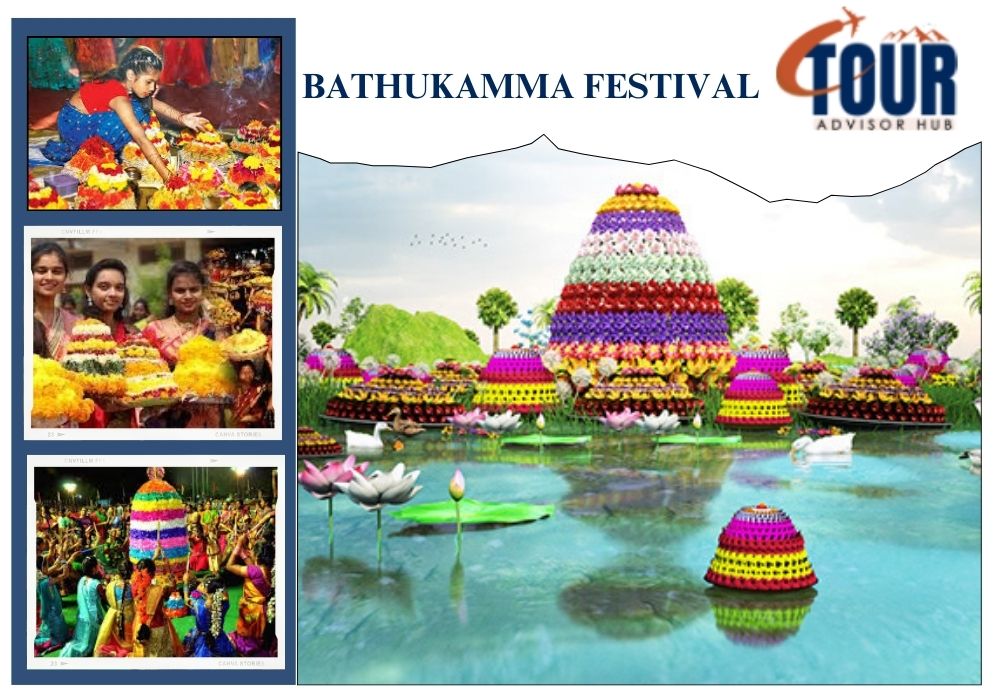

Bathukamma is not just a festival—it is the heart of Telangana’s cultural identity. Celebrated with flowers, songs, and togetherness, Bathukamma 2025 will begin on September 21, 2025 and conclude on September 29, 2025 with Saddula Bathukamma. The nine days represent devotion, womanhood, and harmony with nature.
Meaning of Bathukamma
The name Bathukamma is derived from two Telugu words:
- Bathuku – Life
- Amma – Mother/Goddess
Together, it means “Mother Goddess, Come Alive”, a symbolic prayer for life, prosperity, and good health. The festival honors Goddess Gauri (Parvati) and is celebrated as a mark of gratitude to nature.
Origin Story of Bathukamma
There are two popular legends behind Bathukamma’s origin:
- Goddess Gauri’s Awakening – After slaying the demon Mahishasura, Goddess Gauri fell into a deep sleep. Devotees prayed for her return, and Bathukamma emerged as a festival to welcome her back to life.
- Princess Bathukamma – A Chola king and queen were blessed with a daughter after praying to Goddess Lakshmi. She was named Bathukamma, meaning “live forever.” The princess grew to be revered as a divine form, inspiring the festival.
Both stories celebrate life, resilience, and the divine feminine spirit.
Preparations for Bathukamma Festival
- Flower Collection: Seasonal wildflowers like gunuka, tangedu, banthi, lotus, and marigold are gathered.
- Decorating Bathukamma: Flowers are stacked in concentric layers, forming a conical tower resembling a temple gopuram.
- Turmeric Idol (Gauramma): A turmeric idol representing Goddess Gauri is placed on top.
- Traditional Attire: Women dress in vibrant saris and ornaments; young girls wear lehengas or half-saris.
- Songs & Dance: Folk songs praising Bathukamma and Telangana’s culture are practiced in advance
Rituals of Bathukamma 2025
The festival is observed for nine days, each dedicated to a specific offering (naivedyam). Women gather in groups, place their Bathukammas in the center, sing traditional songs, and dance around them in rhythmic circles.
On the final day, Saddula Bathukamma, the decorated flower stacks are carried in processions to local lakes, ponds, or rivers and immersed in water, symbolizing the return of nature’s beauty and fertility. The turmeric idol (Gauramma) is preserved and applied to married women’s mangalsutras for blessings.
The Nine Days & Their Offerings
| Day | Name (Telugu / English) | Typical Offering (Naivedyam) |
| Day 1 | Engili Pula Bathukamma | Rice flour with sesame seeds |
| Day 2 | Atukula Bathukamma | Flattened rice, jaggery, boiled lentils |
| Day 3 | Muddapappu Bathukamma | Soft-cooked lentils with milk and jaggery |
| Day 4 | Nanabiyyam Bathukamma | Rice soaked in milk and water |
| Day 5 | Atla Bathukamma | Wheat flour dosas (atlu) or rotis |
| Day 6 | Aligina (Alaka) Bathukamma | Day of fasting or minimal offering |
| Day 7 | Vepakayala Bathukamma | Food offerings shaped like neem fruit (vepakayalu) |
| Day 8 | Vennela Muddala Bathukamma | Sesame seeds with butter/ghee (muddalu sweets) |
| Day 9 | Saddula Bathukamma (Final Day) | Five types of rice dishes before immersion of Bathukamma |
Cultural Significance
Bathukamma is more than worship; it is:
- A celebration of nature’s bounty after the monsoon.
- A tribute to womanhood and feminine power.
- A source of community bonding, where people come together in joy.
- A marker of Telangana’s cultural pride, declared as the state festival.
Conclusion
Bathukamma 2025 promises to be a radiant celebration filled with flowers, songs, and devotion. It symbolizes life, resilience, and harmony with nature. As women gather to sing, dance, and immerse their floral offerings, Bathukamma continues to thrive as Telangana’s most cherished festival—keeping alive its traditions, stories, and cultural pride.


